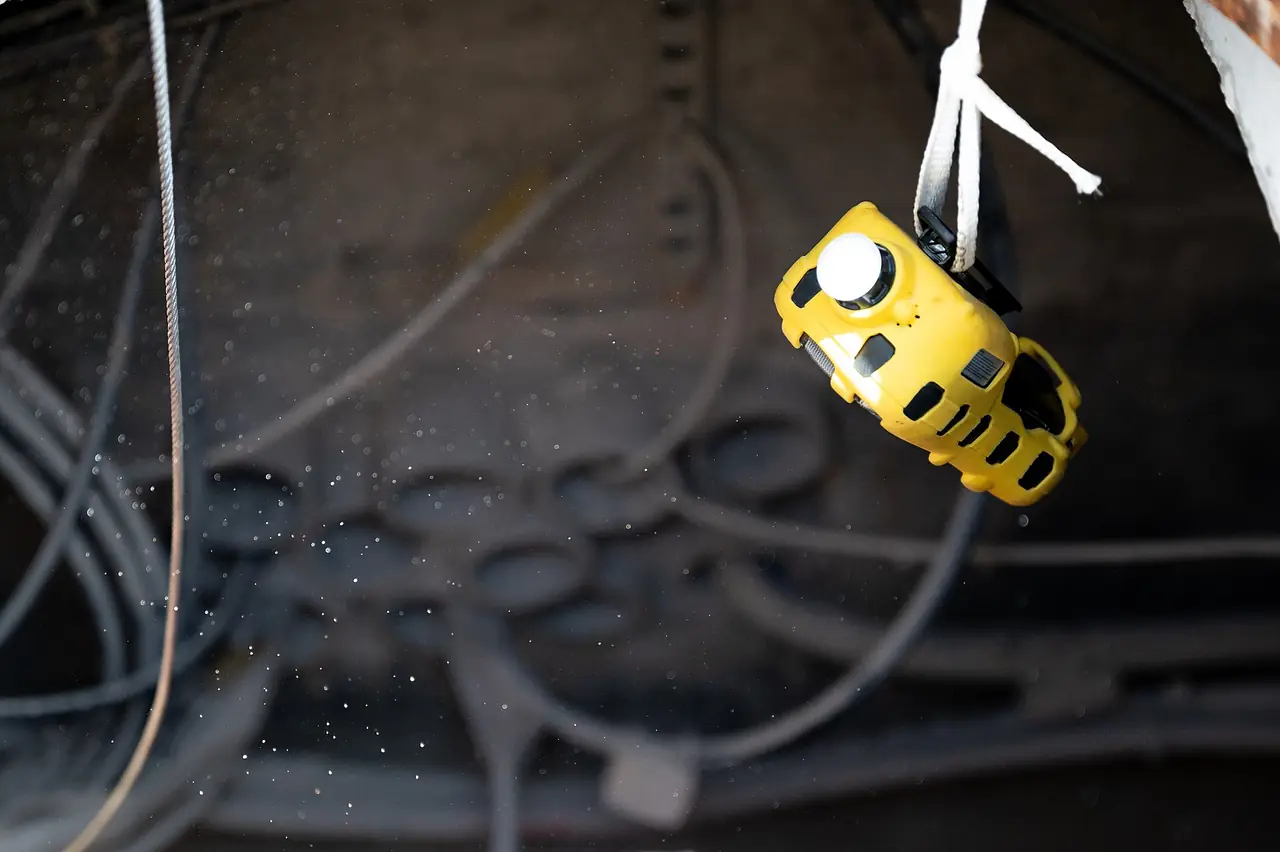

A gas detector can look perfectly normal — display on, no fault message — and still fail to respond to gas. Two routine checks guard against this: the bump test and the calibration. They are often confused, but they answer different questions and are done at different intervals.
Two different questions
A bump test (also called a function test) answers the question: does the instrument respond to gas and do its alarms work? The sensors are briefly exposed to a test gas of known concentration, high enough to trigger the alarms. The instrument passes if every sensor responds within the expected time, the reading reaches the acceptance criterion and the audible, visual and vibrating alarms all activate.
A calibration answers a second question: is the reading accurate? The instrument is exposed to clean air or zero gas and then to a certified test gas, and its readings are compared with the known concentrations. If the readings are outside the tolerance, the instrument is adjusted so that it reads correctly.
Some guidance documents, including the OSHA safety and health information bulletin on direct-reading monitors, add a middle step, the calibration check: test gas is applied and the reading compared with the cylinder value, without adjustment. If it is within the manufacturer's tolerance, accuracy is confirmed; if not, a full calibration follows.
| Bump test | Calibration | |
|---|---|---|
| Purpose | Sensors and alarms respond | Readings are accurate |
| Gas | Test gas above alarm level | Zero gas and certified test gas |
| Adjustment | None | Instrument adjusted if out of tolerance |
| Typical interval | Before each day's or shift's use | Months, per manufacturer and national guidance |
| Performed by | Trained user | Competent person, workshop or docking station |
How often
There is no single worldwide rule, but authoritative guidance points in the same direction.
- In the United States, the OSHA bulletin (updated in 2024) refers to the position of the International Safety Equipment Association: a bump test or calibration check before each day's use, in accordance with the manufacturer's instructions, and more often when conditions warrant. It recommends a full calibration whenever a bump test or calibration check fails.
- In Germany, DGUV Information 213-056 (formerly leaflet T 021, edition October 2023) for toxic gases and oxygen recommends, for portable instruments, a visual check and bump test (Anzeigetest) before each work shift, a function check with zero and test gas — including calibration and, if necessary, adjustment — at least every four months, and a full system check yearly. Its companion for flammable gases is DGUV Information 213-057 (formerly T 023). For emergency services that cannot test daily, it allows a visual check before use, a bump test after every use and a test at least every four weeks.
- The manufacturer's instructions always apply and may require shorter intervals.
Additional tests are needed after a drop or impact, after exposure to water, after a concentration above the measuring range, and when the instrument has been in an atmosphere that may poison the sensors. An instrument that has not been tested for a long time should be fully checked before use.
Records
Keep a record of every test: instrument identification (type, serial number), date, who performed it, the test gas used, the result and any defects found. For calibration also record the readings before and after adjustment. Docking stations and data-logging instruments do much of this automatically, but somebody still needs to review the records regularly and act on failures. Records show trends — a sensor that needs more adjustment each time is approaching the end of its life.
When a test fails
- Do not use the instrument. Take it out of service and mark it.
- Check the obvious: test gas cylinder within its expiry date and correct concentration, regulator and tubing connected, filters and sensor openings clean, battery charged.
- Repeat the test once. If it fails again, perform a calibration (or have it done).
- If calibration fails or the sensor cannot be adjusted to the reference value, replace the sensor or send the instrument for repair.
- Use a tested spare instrument for the work in the meantime.
Cross-sensitivity
Electrochemical sensors are designed for one target gas but also react to some others. A carbon monoxide sensor may respond to hydrogen; some hydrogen sulfide sensors are affected by sulfur dioxide or nitrogen dioxide, which may also cause a negative (too low) reading. The manufacturer's cross-sensitivity tables help to interpret unexpected readings, and they explain why the test gas must be the one specified for each sensor. A reading caused by another gas is still a warning that something is present.
Sensor poisoning and inhibition
Catalytic bead sensors for flammable gases can lose sensitivity permanently when exposed to poisons such as silicone vapours (from sealants, lubricants, sprays), tetraethyl lead and some phosphorus compounds, or temporarily through inhibitors such as hydrogen sulfide and halogenated hydrocarbons. The danger is that a poisoned sensor still shows zero in clean air — only a bump test reveals the loss. Where poisons may be present, test more often, consider infrared sensors for hydrocarbons, and avoid cleaning products containing silicone. Very high flammable concentrations can also damage catalytic sensors.
More on detector types in choosing a portable gas detector, and on care of equipment on the page maintenance.