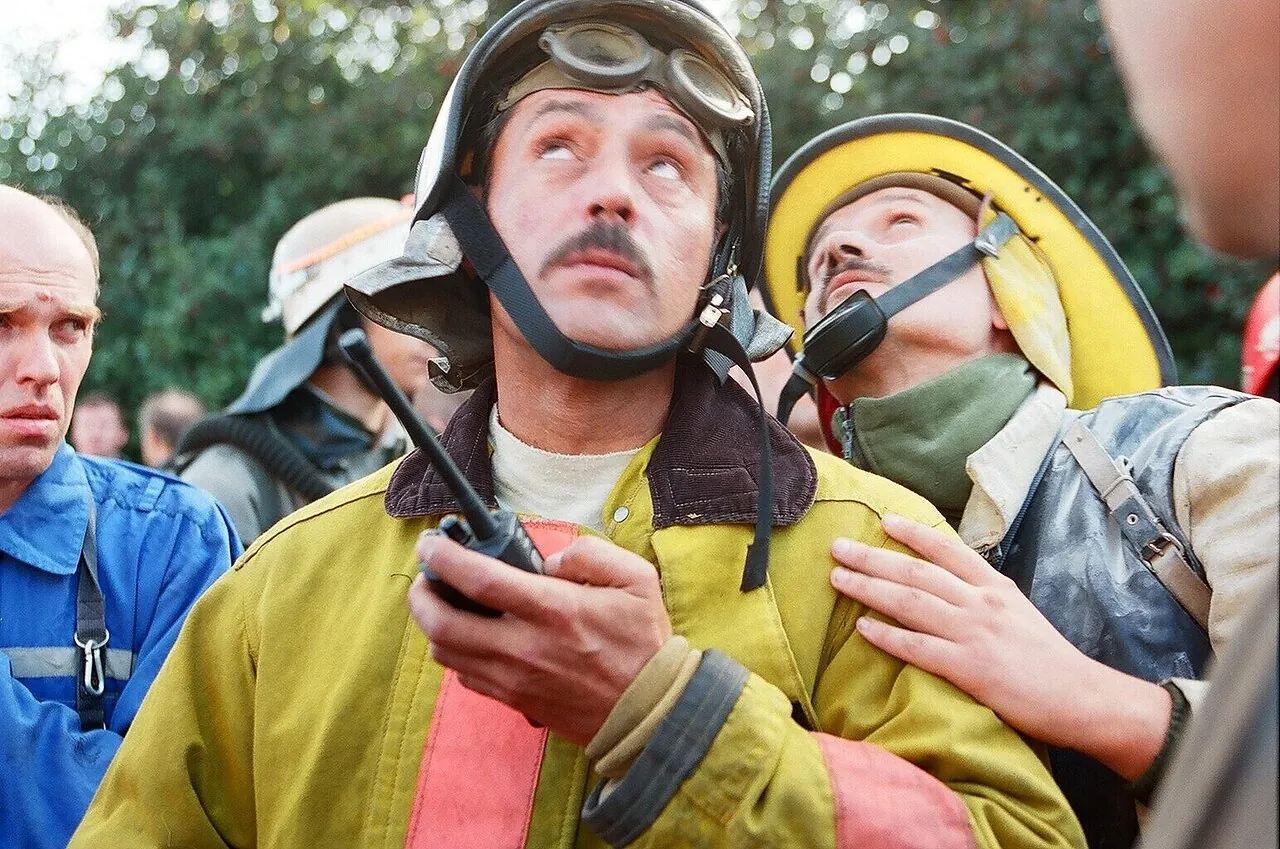

A breathing apparatus team works where people outside cannot see it, and the masks make speech hard to understand even at arm's length. Reliable contact within the team and with the entry control point is therefore part of the safety system, not an extra. Lost contact is one of the factors that appears most often in investigations of fatal accidents.
Within the team
Team members stay in touch by sight, voice or touch at all times. Speech through a full-face mask is muffled; many masks have a speech diaphragm, and electronic voice amplifiers fitted to the mask make speech clearer for people nearby. Short, standard phrases work better than long explanations. Before entry the team agrees on the task, the route, the turn-around pressure and what each member will do in an emergency.
Radio
Each team usually carries at least one portable radio, normally held by the team leader. Good radio discipline means:
- a dedicated channel for BA operations, and a unique call sign for every team;
- testing the radio by operation before entry;
- short messages: who is calling whom, the message, and confirmation that it has been understood;
- reports at fixed points — after starting to breathe from the set, on reaching the work area, and when starting the return — plus whenever the situation changes;
- keeping the channel free for priority and emergency traffic.
Radio coverage in basements, tanks, tunnels and steel structures can be poor. Plan for this: relay stations, a leaky feeder or a person relaying messages at the entrance may be needed.
Radios in explosive atmospheres
Where a flammable atmosphere may be present, radios, lamps, voice amplifiers and other electronics must be explosion-protected (in the EU, certified under the ATEX equipment directive 2014/34/EU, usually intrinsically safe). The protection is only valid with the approved battery and accessories, and with an undamaged housing. See safety for more on ignition sources.
Line and hand signals
When radios fail or cannot be used, teams fall back on simple signals. On a personal line or rope, a widely taught convention (known in English by the mnemonic OATH) is:
| Pulls | Meaning |
|---|---|
| 1 | OK? / OK |
| 2 | Advance, give more line |
| 3 | Take up the line, coming out |
| 4 | Help, emergency |
Such codes differ between countries and services, so the team and the attendant must agree on them in advance and practise them. Hand signals — for OK, stop, go back, low air, problem — are useful where team members can see each other, for example in a confined space with lighting. A guide line or hose line also helps the team find its way back; in Germany, the firefighting regulation FwDV 7 points out that radio contact or a thermal imaging camera is not a suitable means of securing the way back.
Entry control
The entry control officer records every team on the entry control board: names, call sign, time of entry, starting pressure and expected time of return. They follow the elapsed time, remind the team to check pressures at agreed intervals, log the reports and call the team out when the time is up. The entry control officer is the link between the teams inside and the incident commander, and decides together with the commander when the standby team must go in.
Emergency calls
A team in difficulty calls for help early and unambiguously. Many services use the word "Mayday", repeated three times, followed by the caller's call sign, location and situation. Calling too late is a recurring finding in fatal investigations: the call should be made as soon as a team member is lost, trapped, out of air or injured, not after self-rescue attempts have failed.
Distress signal units (PASS)
A distress signal unit, called a PASS (personal alert safety system) in North America, gives a loud alarm if the wearer stops moving for a set time, and can be triggered by hand. Modern units are often built into the breathing apparatus and switch on when the cylinder is opened. They help rescuers find a casualty in smoke but do not replace radio contact. The North American requirements formerly in NFPA 1982 are now part of NFPA 1970.
Telemetry
Telemetry systems transmit data from each wearer's apparatus to the entry control point: cylinder pressure, estimated remaining time and distress alarms, sometimes with a recall signal from the board to the wearer. They give entry control a live picture, but radio coverage limits apply here too, and procedures must define what to do when the telemetry signal is lost.
See also common mistakes with SCBA, tasks and equipment.
Sources
- UK Operational guidance — Breathing apparatus (2014): PDF hosted by the National Fire Chiefs Council
- NIOSH FFFIPP report F2016-07: Volunteer fire fighter dies after running out of air and becoming disoriented in retail store in strip mall fire — North Carolina
- NFPA: NFPA 1970 — protective ensembles, open-circuit SCBA and PASS
- European Commission: Equipment for potentially explosive atmospheres (ATEX)